

In 1983, Charles Walton invented Radio Frequency Identification technology. Better known as RFID, it is a tag that receives and returns radio signals sent out by an antenna. A reader then accepts and stores the signals as data, which triggers a variety of actions. Today, we place RFID tags in our pets for loss prevention, on our car windshields for car wash memberships, and even on the bottom of our shirts that we take to the dry cleaners. Prior to the contribution of happy customers wearing clean shirts in their clean cars, RFID spurred the momentum of the widespread use of NFC: Near Field Communication.
In 2002, Sony and NXP Semiconductors invented the new NFC technology. According to c|net, It allowed data to be transferred over a wireless system and allowed devices to “talk” within a range of 20 centimeters. It was at that moment, the idea of consumers buying items with their cellular devices was introduced.
Think of it as a smart card technology in a device allowing consumers to transfer data and pay for services.
Greg Dvorken, Sony Spokesperson
It was said that NFC devices would be expected to become available in early 2004. Sure enough, in 2004, major cellular companies like Nokia, Sony, and Philips started strategizing the integrations of NFC within their production as preparation for 2006: the first set of NFC tags.
By 2011, Google Pay was released to be used with the first phones incorporating NFC support and in 2014, the game changed. Apple announced that their iPhone 6 and Apple Watch would allow contactless NFC payments via Apple Pay – a sleek development featuring state-of-the-art security and privacy protocols. While contactless payments being made directly to POS systems weren’t unheard of, Apple’s tactic to plaster their logo to every door, window, card reader, website, and even non-profit organization donation buttons was captivating.
While I’m no IT expert, I sure know a fair amount about marketing. According to an article published in Blue Bite, the average NFC chip costs $0.25. The cost of the NFC chip isn’t even visible in the iPhone XS Max’s 200% profit margin. You know what is visible? The Apple logo on every check-out register at your local CVS, Ross, Sunoco, Target, etc. From Goodwill to Gucci, you can’t shake it. For just $0.25 per customer, Apple gave themselves priceless advertising within 85% of U.S. retailers, micromanaged by their own marketing guidelines.
Now, I can hear you all the way from my home office: “Well, I already have an iPhone. What’s a bitten apple in a Costco window next to an ‘American Express accepted here’ sign going to do?”

First off, you’re wrong: Costco does not accept American Express. Second, your purple iPhone 12, cased in a clunky Otterbox, with Olive, your tuxedo cat, as your lock screen will never compare to that controlled Apple Pay logo. The power behind any Apple logo, in all of its monotone crispness, is just that. You crave that compact, white box. You yearn for the scratch free phone screen and the never-been-dropped-on-concrete AirPods. You reach for the stars in hopes of grabbing that HomePod that won’t turn on when you call for your daughter, Alexa. You forget what you’re missing until you see that Apple logo, and it’s hard to neglect when that evil apple is staring you down in every McDonalds, Starbucks, and Sports Authority. Who are we kidding? No one goes to Sports Authority.

Informed CEO’s of major companies are smelling the roses on the ingenious marketing strategy that shook every marketing specialist zeroed in on paid media. Here we are, watching the Fortune 500 company encourage stores to flaunt the Apple logo around at the shop’s expense.
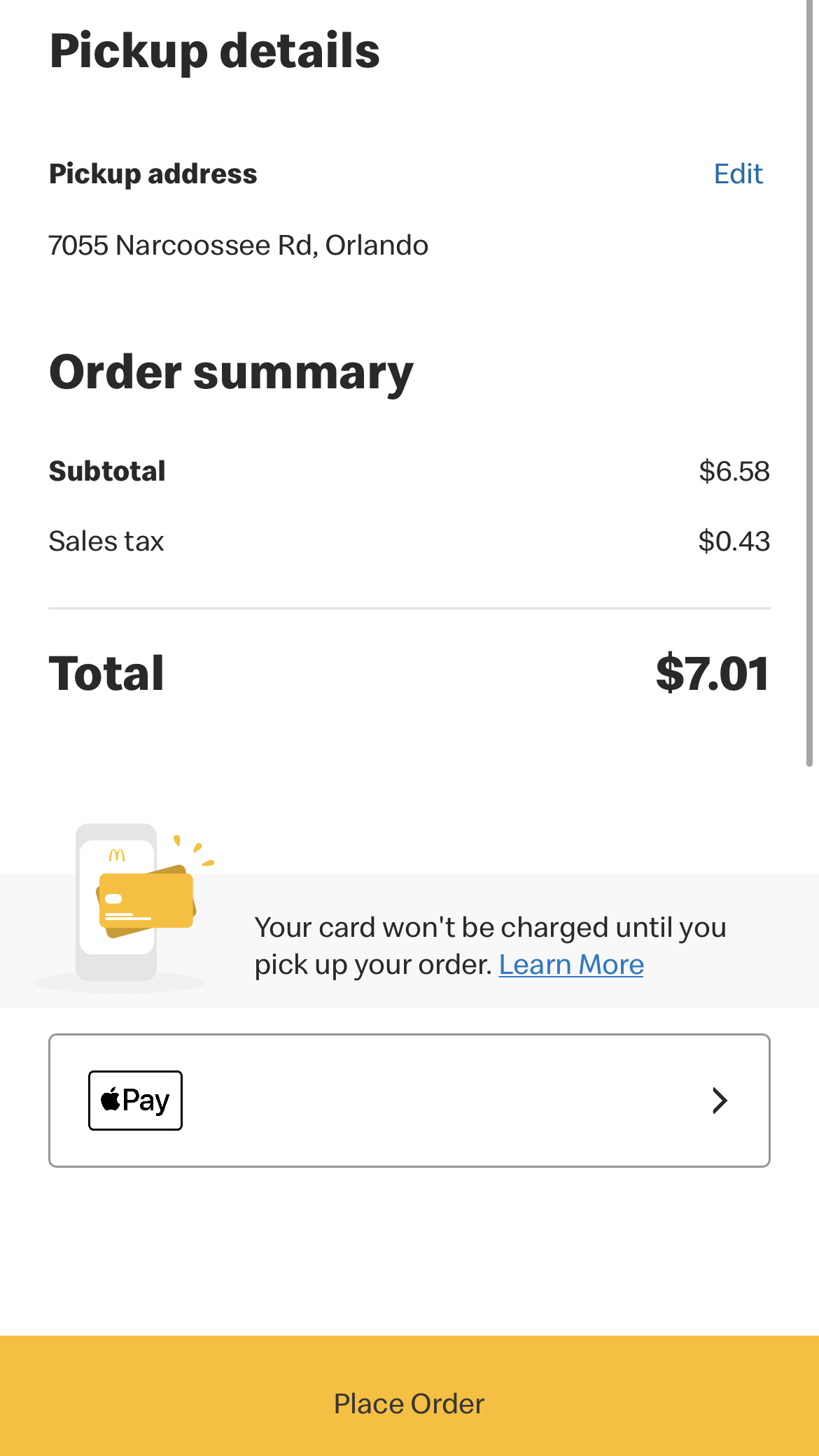
But here’s the catch: removing consumer choice is at risk of removing the consumer. In other words, preventing mobile pay is not necessarily the ideal solution. Not only would this remove a rising paramount method of payment, but it dismisses its value of an inexpensive mean to expand one’s customer base. Through mobile pay, you open up the opportunity to exposure, consumer trust, loyalty programs, and mobile campaigns. While Starbucks may be the obvious example, McDonald’s offers great use of a combination of all mobile pay advantages through their app. With enticing deals of free meals, mobile pay exclusive offers encourage customers to take the leap and link Apple Pay to their McDonald’s account. Following the release of their loyalty program, McDonald’s app downloads saw an increase of 1.6 million users within a month. It creates a convenient and affordable method that makes you frequent the chain more than you used to, and certainly more times than you would care to admit.

So, should you get rid of the logo?
When discussing eCommerce, it’s comforting to see the Apple Pay, Google Pay, and even Android’s logo. It gives us a sense of security in this confusing, technologically advancing world. It eases us knowing that nearly 100 million users had the confidence to digitize their wallet, without ever actually understanding “The Cloud.” But, what’s The Solution for brick-and-mortar’s utilizing a cashless alternative without permitting a form of free advertisement for companies who can afford the expense?
“Mobile Pay Accepted”
 folio & fable Designs
Leave a comment